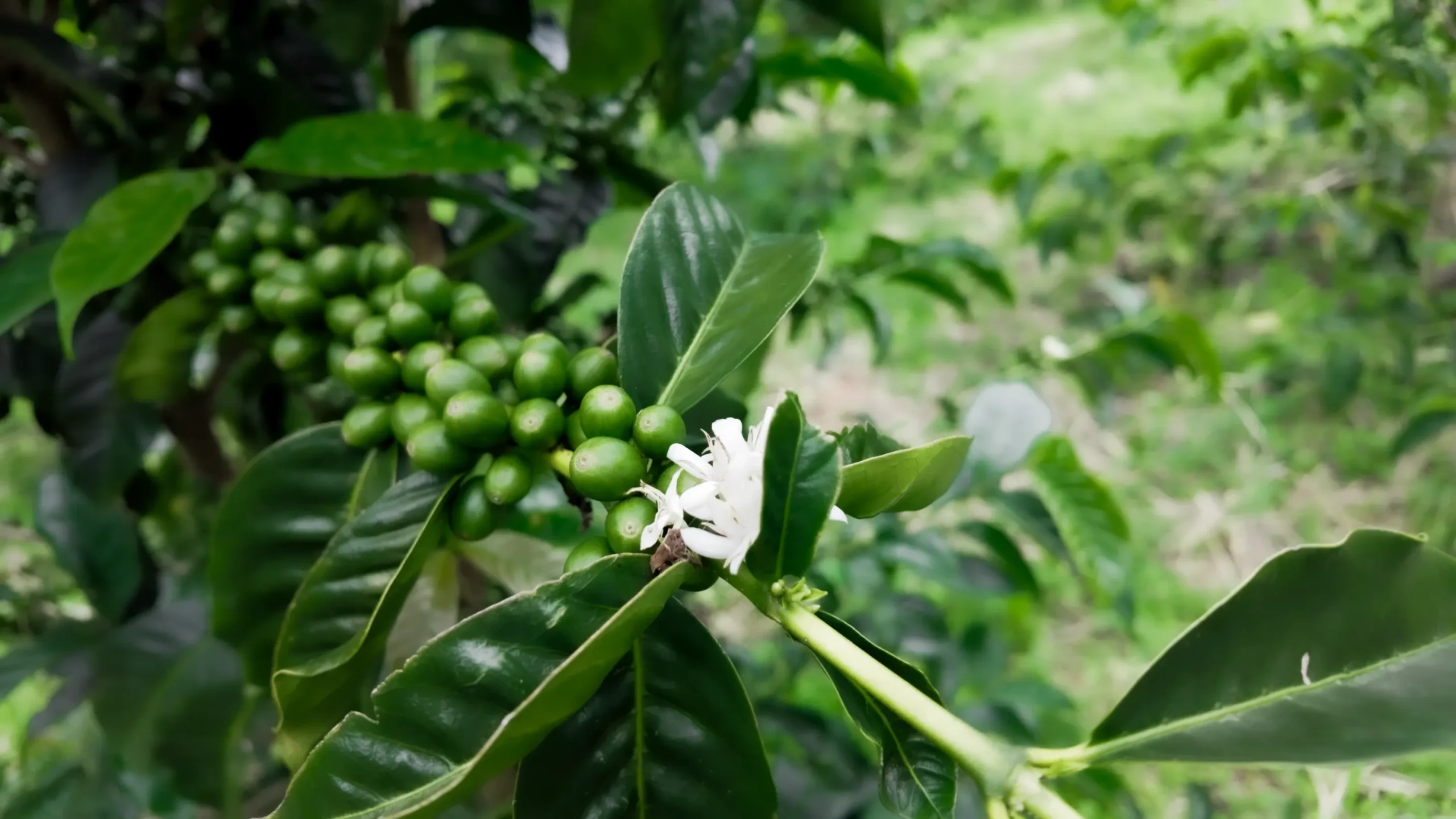
Brazil is the world’s largest coffee producer, but its story is not one of volume alone. For Eightyplus, Brazil should be introduced as a flexible specialty origin: a country where large-scale Arabica and conilon production sits alongside estate-led experimentation, differentiated terroirs and carefully separated micro-lots.
USDA’s 2025/26 outlook forecasts 65 million 60-kilogram bags of Brazilian coffee, split between 40.9 million bags of Arabica and 24.1 million bags of robusta/conilon. Minas Gerais remains the leading producing state, while Espírito Santo is the country’s major robusta producer; São Paulo, Bahia and Rondônia add further diversity. The report places the 2025/26 harvest from April for robusta and May for Arabica, with completion expected by September. In website copy, use Brazil’s scale as context, then move quickly to provenance: named state, region, producer, variety, process and crop year. That transition turns an often-generic origin into a transparent specialty-coffee story.
Classic cocoa/caramel profiles; pulped-natural sweetness; fruit-forward experimental lots.